

Tool Calling / Function Calling
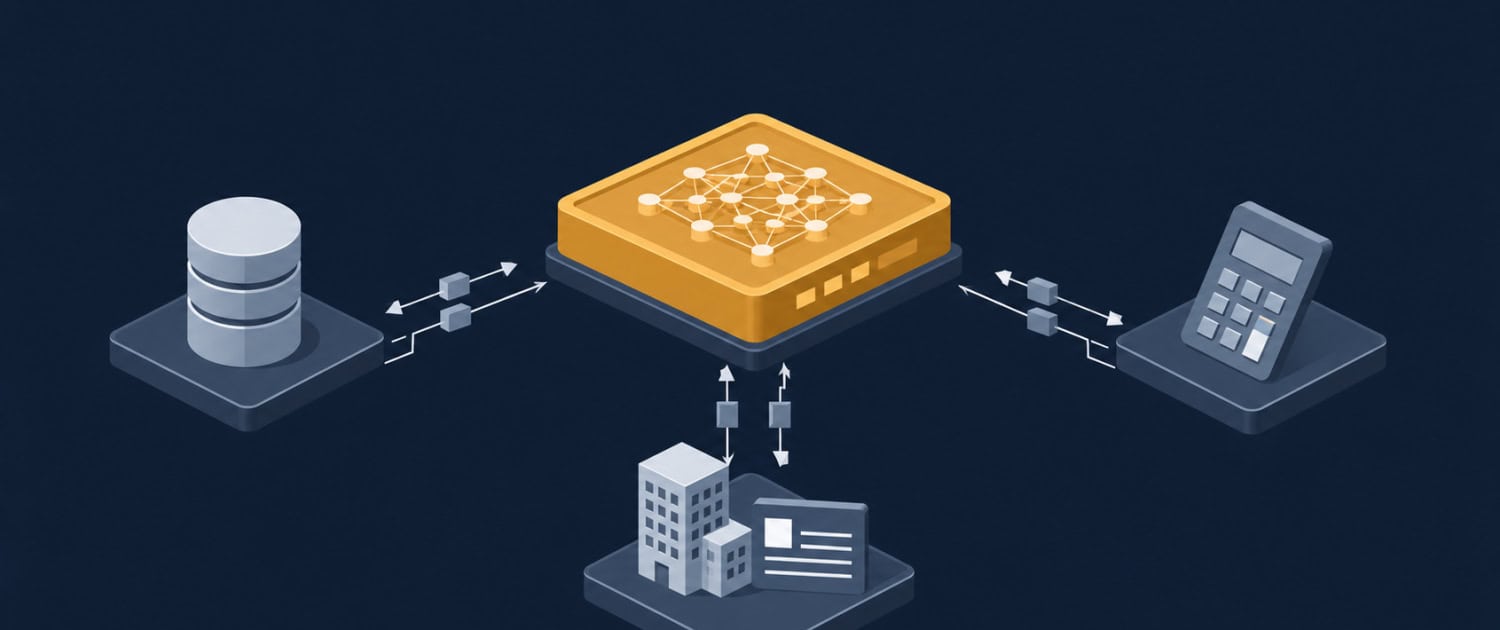
Tool Calling / Function Calling is a capability of modern AI models that allows them to invoke external tools such as APIs, databases, calculators, or search engines during a conversation or workflow. Rather than generating a text response, the model outputs a structured instruction that specifies which tool to use and what inputs to pass. The tool executes, returns a result, and the model incorporates that result into its response. In commercial real estate, tool calling enables an AI model to retrieve live interest rates, run a debt-sizing calculation, or query a property database mid-conversation.
Putting Tool Calling / Function Calling in Context
When an acquisitions analyst asks an AI assistant to size a loan for a prospective multifamily acquisition, tool calling allows the model to pass the deal’s NOI, LTV target, and current SOFR rate to a debt calculator, receive the result, and present a fully formed debt schedule without the analyst switching to a separate spreadsheet or manually entering inputs.
Frequently Asked Questions about Tool Calling / Function Calling
How does tool calling work in practice for a CRE workflow?
When a CRE professional prompts an AI assistant with a task that requires live or calculated data, the model identifies which tool is appropriate and outputs a structured call specifying the tool name and the required inputs. The tool runs independently, returns a result, and the model folds that result into its final response. From the user’s perspective, the interaction feels like a single conversation, even though multiple systems may have been queried behind the scenes.
What is the difference between tool calling and a standard API integration?
A standard API integration connects two systems on a fixed schedule or trigger, passing data between them according to a predetermined configuration. Tool calling is different because the AI model decides dynamically, based on the user’s request, whether to invoke a tool, which tool to use, and what inputs to send. This makes tool calling more flexible and context-aware than a traditional integration, though it also means the model’s judgment plays a role in whether the right tool is selected.
Which CRE tasks are well suited to tool calling?
Tool calling is well suited to any task where the AI needs data it cannot generate from memory alone. In CRE, practical use cases include pulling current treasury yields to calculate a debt spread, querying a property database for comparable sales, running a cap rate calculation against a live NOI figure, or retrieving lease expiration data from a property management system. The common thread is that the answer depends on external, often time-sensitive information.
What are the risks or limitations of relying on tool calling in CRE analysis?
The primary risk is that the model may call the wrong tool, pass incorrect inputs, or misinterpret a tool’s output, particularly when the user’s prompt is ambiguous. The quality of the result also depends entirely on the quality of the underlying tool or data source being called. CRE teams adopting tool calling should validate outputs against known benchmarks during rollout and ensure that any tools connected to live financial or property data have appropriate access controls.
How does tool calling relate to AI agents used in CRE?
Tool calling is one of the core capabilities that makes AI agents functional. An AI agent in CRE, such as one configured to monitor a portfolio and flag covenant breaches, relies on tool calling to retrieve the underlying loan data, run the relevant calculations, and report results without human intervention at each step. Without tool calling, an AI agent would be limited to reasoning over information already present in its context window, which significantly constrains its usefulness in data-intensive CRE workflows.
Click here to get this CRE Glossary in an eBook (PDF) format.