

IT Load (Critical Load)
The portion of electrical power delivered directly to IT equipment — servers, storage arrays, and networking hardware. This is the data center’s rentable capacity and the primary driver of revenue, since tenants pay for access to this power rather than for the facility’s total energy draw.
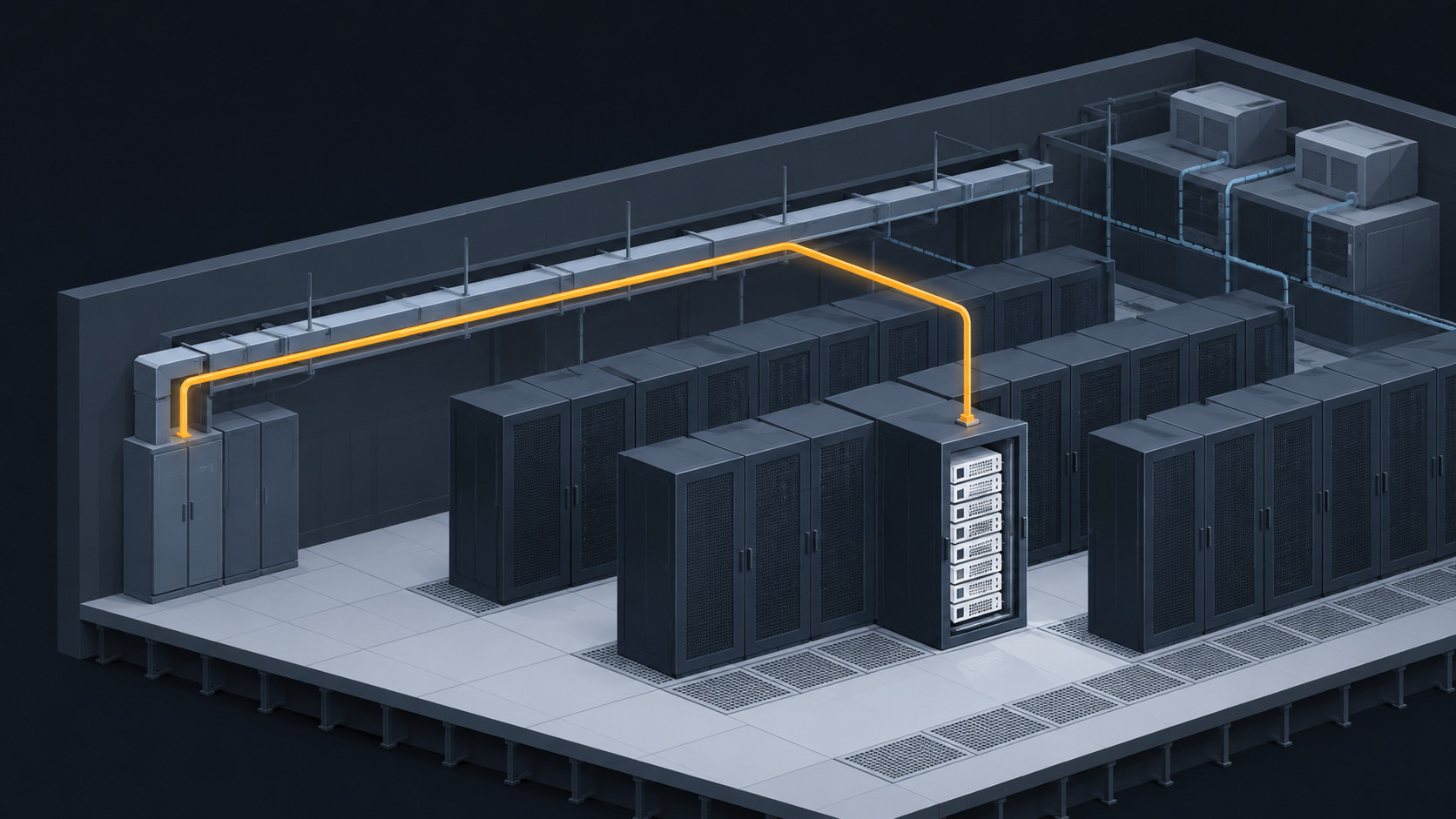
Putting IT Load (Critical Load) in Context
When underwriting a colocation data center, an analyst builds the revenue model around contracted critical IT load in kilowatts rather than leased square footage, because a tenant paying for a 500 kW power commitment generates the same revenue whether its equipment occupies two cabinets or twenty, and the facility’s ability to sign new tenants is constrained entirely by how much uncommitted critical load capacity remains on the floor.
Frequently Asked Questions about IT Load (Critical Load)
1
A data center consumes power across multiple systems, including the IT equipment itself, the cooling infrastructure, lighting, power distribution losses, and other overhead. Critical IT load refers only to the portion that reaches the servers, storage, and networking hardware, which is the revenue-generating component of that total draw. The ratio of total facility power to critical IT load is captured by the Power Usage Effectiveness metric, and a well-operated modern facility aims to keep that ratio as close to 1.0 as possible, meaning most energy consumed is going directly to productive IT work rather than to overhead systems.
Why do data center leases and valuations reference kilowatts rather than square footage?
Square footage is a poor proxy for data center value because the density of computing equipment a tenant deploys can vary dramatically within the same physical footprint, and what limits how much equipment a tenant can run is available power, not available floor space. A tenant deploying high-density GPU servers for AI workloads might consume 80 to 100 kilowatts in a single cabinet, while a tenant running conventional enterprise servers might draw only 5 to 8 kilowatts across the same physical area. Structuring leases and underwriting models around kilowatts of committed critical load creates a consistent, revenue-correlated unit of measure that reflects the actual economic constraint of the facility.
What is the difference between contracted critical load and actual draw, and why does it matter?
Tenants in colocation facilities typically contract for a committed power allotment, meaning they pay for reserved critical load capacity regardless of whether their equipment is drawing that full amount at any given moment. Actual draw is the real-time power consumption of the tenant’s equipment, which is almost always less than the contracted amount, particularly early in a lease when a tenant is still deploying hardware. For the operator, contracted load is what drives revenue recognition and capacity planning, while actual draw informs cooling and infrastructure management, and the gap between the two represents headroom the tenant may fill over time as it scales its deployment.
How does the shift toward AI workloads affect critical IT load assumptions in underwriting?
AI training and inference hardware, particularly GPU and custom accelerator clusters, operates at power densities that conventional data center infrastructure was not designed to support, and the gap between traditional enterprise critical load assumptions and AI-grade requirements is substantial. A white space floor built to deliver 10 kilowatts per cabinet requires significant mechanical and electrical upgrades to support modern AI deployments at 50 to 100 kilowatts per cabinet, and those upgrades affect both capital expenditure projections and the effective rentable critical load the facility can offer. Underwriters evaluating existing colocation assets now routinely assess what percentage of critical load capacity is AI-ready versus legacy-density, since that distinction increasingly determines competitive positioning and achievable lease rates.
What risks should a CRE investor understand about critical IT load capacity as a valuation driver?
The primary risk is that contracted critical load capacity is only as valuable as the utility infrastructure behind it, and securing additional power from a grid-constrained utility can take years, meaning a facility that exhausts its contracted capacity has limited ability to grow revenue without a lengthy and capital-intensive expansion process. There is also the risk of stranded capacity, where a facility has contracted power available but cannot attract tenants at the rates underwritten because competing supply has entered the market or tenant power density requirements have outpaced what the facility’s infrastructure can deliver. Investors should also scrutinize how much of a facility’s contracted critical load is covered by long-term leases with creditworthy tenants versus shorter-term or month-to-month commitments, since the stability of the revenue stream depends directly on the term structure of power commitments rather than on lease expirations measured in square feet.
Click here to get this CRE Glossary in an eBook (PDF) format.