

AI-Native
A term used to describe a professional, team, or firm that has restructured its workflows and processes around AI tools, rather than using AI as an occasional supplement to existing processes. An AI-native CRE professional integrates AI agents, automation platforms, and large language models into daily workflows such as underwriting, market research, asset management reporting, and leasing analysis. This is contrasted with the AI-analog approach, which describes the current state of most CRE firms where humans drive the work and AI plays a supporting role.
Putting AI-Native in Context
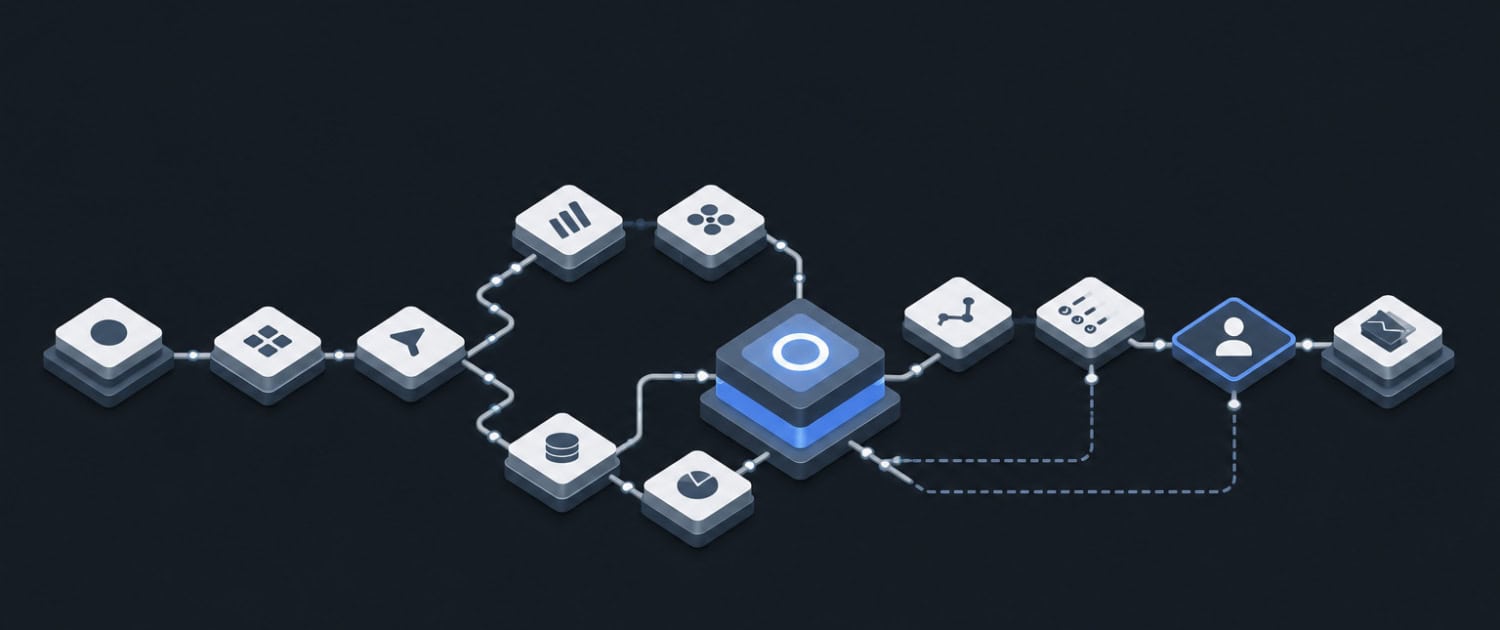
A small acquisitions team operating with an AI-native approach runs its entire deal screening process through a connected set of AI tools: inbound deal submissions are parsed and scored automatically, comparable transactions are pulled from a connected market database, and a draft underwriting summary is generated before an analyst reviews the opportunity. The same volume of deal flow that previously required three analysts to triage now moves through initial screening with one, because the process was designed around AI capability from the start rather than layered on top of an existing manual workflow.
Frequently Asked Questions about AI-Native
What is the practical difference between an AI-native CRE firm and one that simply uses AI tools?
A firm that uses AI tools has added them to an existing process, typically to speed up discrete tasks like drafting emails or summarizing documents, while the underlying workflow structure remains unchanged. An AI-native firm has redesigned its workflows so that AI handles entire process segments, with humans intervening at decision points rather than driving each step. The distinction shows up most clearly in staffing and throughput: an AI-native team can often handle significantly more deal flow or asset volume with the same headcount because the process architecture was built to leverage AI capacity from the ground up.
How does a CRE firm begin transitioning toward an AI-native operating model?
The transition typically starts by identifying high-volume, repeatable processes where AI can take on the execution layer while a professional handles review and judgment. Lease abstraction, deal screening, market commentary drafts, and investor reporting are common starting points in CRE. From there, teams document the redesigned workflow, build the connecting automation, and measure output quality before expanding. The firms that move furthest toward AI-native operations tend to treat process redesign as a deliberate initiative rather than an accumulation of individual tool adoptions.
Does becoming AI-native require replacing existing CRE software platforms?
In most cases, AI-native workflows are built on top of or alongside existing platforms rather than replacing them. Yardi, ARGUS, and other core CRE systems remain in place as systems of record, while AI tools and automation layers handle the processing, drafting, and routing work that previously required manual effort. The integration layer, often a workflow builder or API connection, is what allows AI tools to interact with existing systems without requiring a full platform migration. Replacing core infrastructure is rarely the bottleneck; redesigning how work flows through those systems is.
What are the risks of restructuring CRE workflows around AI before the tools are mature enough?
Over-reliance on AI in a workflow designed around its current capabilities creates fragility when those capabilities fall short. If an AI step in an underwriting process produces a structurally flawed output and the review process is not robust enough to catch it, the error propagates downstream. AI-native workflows require strong human checkpoints at consequential decision nodes, not just at the end of the process. Teams that move too quickly toward full automation without building in adequate validation risk compressing the time between a model error and a deal decision, which is the opposite of the control improvement they were seeking.
How does the AI-native model affect the skill sets CRE firms need to hire for?
As firms restructure workflows around AI, the tasks that previously justified entry-level analyst headcount, such as data gathering, initial deal screening, and report formatting, are increasingly handled by automated systems. This shifts hiring emphasis toward professionals who can design and oversee AI workflows, evaluate the quality of AI outputs with domain expertise, and make the judgment calls that sit above the automation layer. CRE domain knowledge remains essential, but the ability to work fluently with AI tools, identify where automation breaks down, and continuously improve the process architecture becomes a meaningful differentiator at every level of the organization.
Click here to get this CRE Glossary in an eBook (PDF) format.