

Multi-Agent System
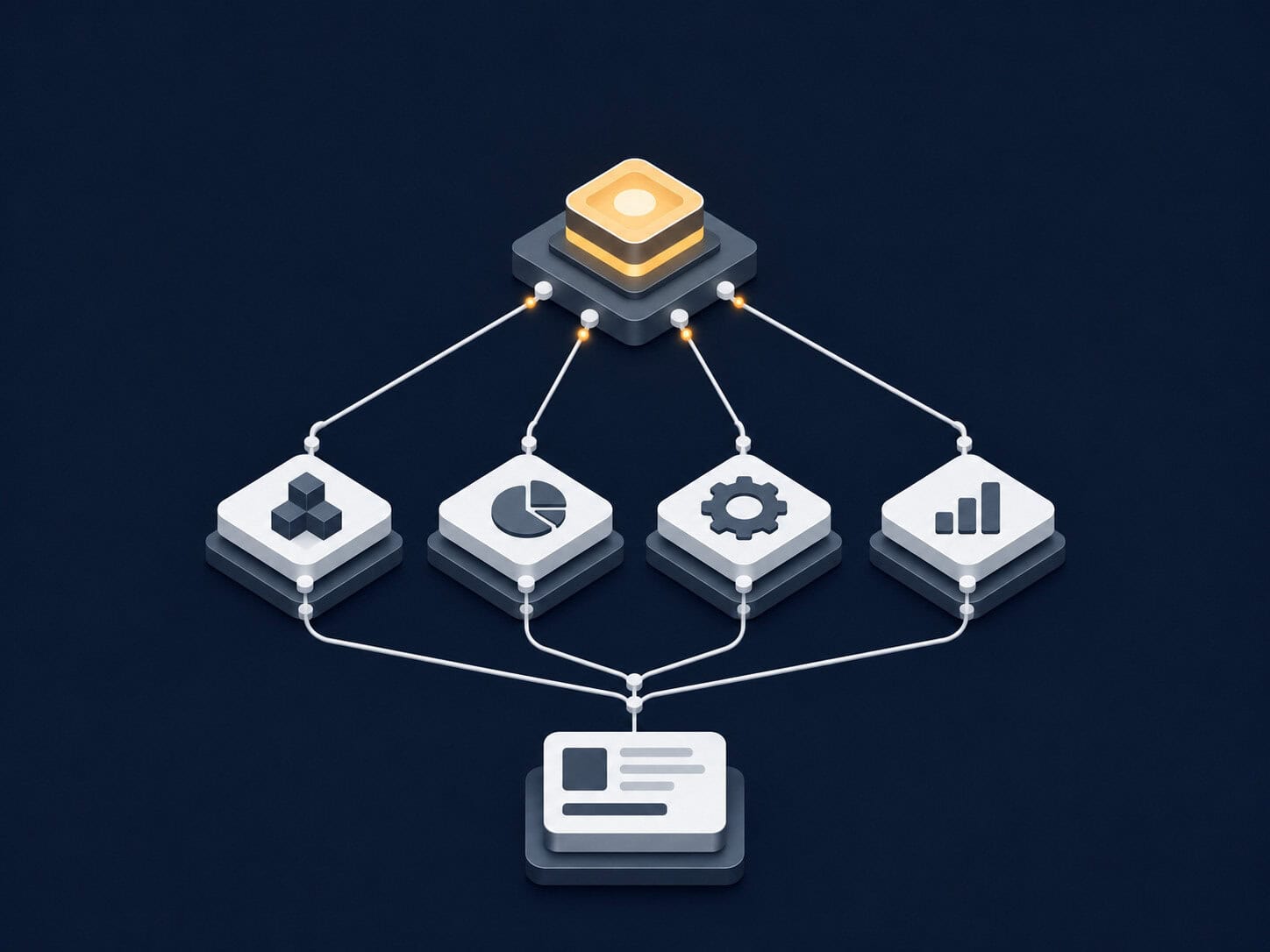
An AI architecture in which multiple specialized AI agents work together to complete a complex task, with each agent handling a distinct component of the workflow. In commercial real estate, a multi-agent system might deploy one agent to pull market comparables, a second to run a financial model, and a third to draft an investment memo, all coordinated by an orchestrating agent. Multi-agent systems are increasingly used to automate end-to-end CRE workflows that previously required multiple analysts working across multiple tools.
Putting Multi-Agent System in Context
A development firm evaluating a potential acquisition triggers a multi-agent workflow by submitting a property address and asking for a preliminary underwriting package. An orchestrating agent breaks the request into discrete tasks: one agent retrieves submarket vacancy and rent trend data, a second populates a discounted cash flow model with the retrieved inputs, and a third drafts an executive summary of the findings formatted to the firm’s internal memo template. The analyst receives a structured first-pass package in minutes rather than assembling it manually across three separate tools and data sources.
Frequently Asked Questions about Multi-Agent System
What is the role of the orchestrating agent in a multi-agent system?
The orchestrating agent acts as the coordinator of the system, receiving the initial task, breaking it into subtasks, assigning each subtask to the appropriate specialized agent, and assembling the outputs into a coherent result. In a CRE context, the orchestrator determines the sequence in which agents run, passes outputs from one agent as inputs to the next, and handles cases where an agent returns an incomplete or unexpected result. The quality of the orchestrating agent’s logic largely determines how reliably the overall system performs on complex, multi-step tasks.
How does a multi-agent system differ from a single AI agent handling the same task?
A single agent handling a complex CRE task must hold all context, instructions, and intermediate outputs within one session, which can degrade performance as the task grows in scope or requires switching between very different skill sets. A multi-agent system distributes the work so that each agent operates within a narrower, well-defined scope where it can perform reliably. Specialization also allows each agent to be configured with the tools, data sources, and instructions most relevant to its specific function, rather than relying on a single generalist agent to handle everything adequately.
What CRE workflows are best suited for a multi-agent architecture?
Multi-agent systems deliver the most value in workflows that span multiple data sources, require sequential processing steps, and produce a structured deliverable at the end. In CRE, strong candidates include end-to-end deal screening, due diligence package assembly, quarterly asset management reporting, and lease renewal analysis across a large portfolio. Workflows that are currently handled by a team of analysts each owning a discrete piece of the process are often good candidates for a multi-agent architecture, since the division of labor already maps naturally onto an agent-per-function design.
What are the failure modes CRE teams should anticipate in a multi-agent system?
The most common failure modes involve errors that compound across agent handoffs. If the data retrieval agent returns an incomplete or misformatted output, the financial modeling agent may process it without flagging the problem, and the memo drafting agent may then present flawed figures in polished prose that looks authoritative. Because each agent operates on the output of the previous one, an early error can propagate invisibly through the chain. Multi-agent systems used in CRE deal processes should include validation checkpoints between agents and a human review step before any output is used in an investment decision.
Does building a multi-agent system require a technical team, or can CRE firms implement one without developers?
Simple multi-agent workflows can be approximated using workflow builder platforms that chain AI steps together, which is accessible to non-technical CRE professionals with some familiarity with automation tools. Fully autonomous multi-agent systems with dynamic task routing, error handling, and real-time data access require a more technical implementation, typically involving agent orchestration frameworks and API integrations with CRE data sources. Most CRE firms benefit from starting with a workflow-builder-based approximation to validate the process logic before investing in a more robust technical architecture.
Click here to get this CRE Glossary in an eBook (PDF) format.