

AI Orchestration
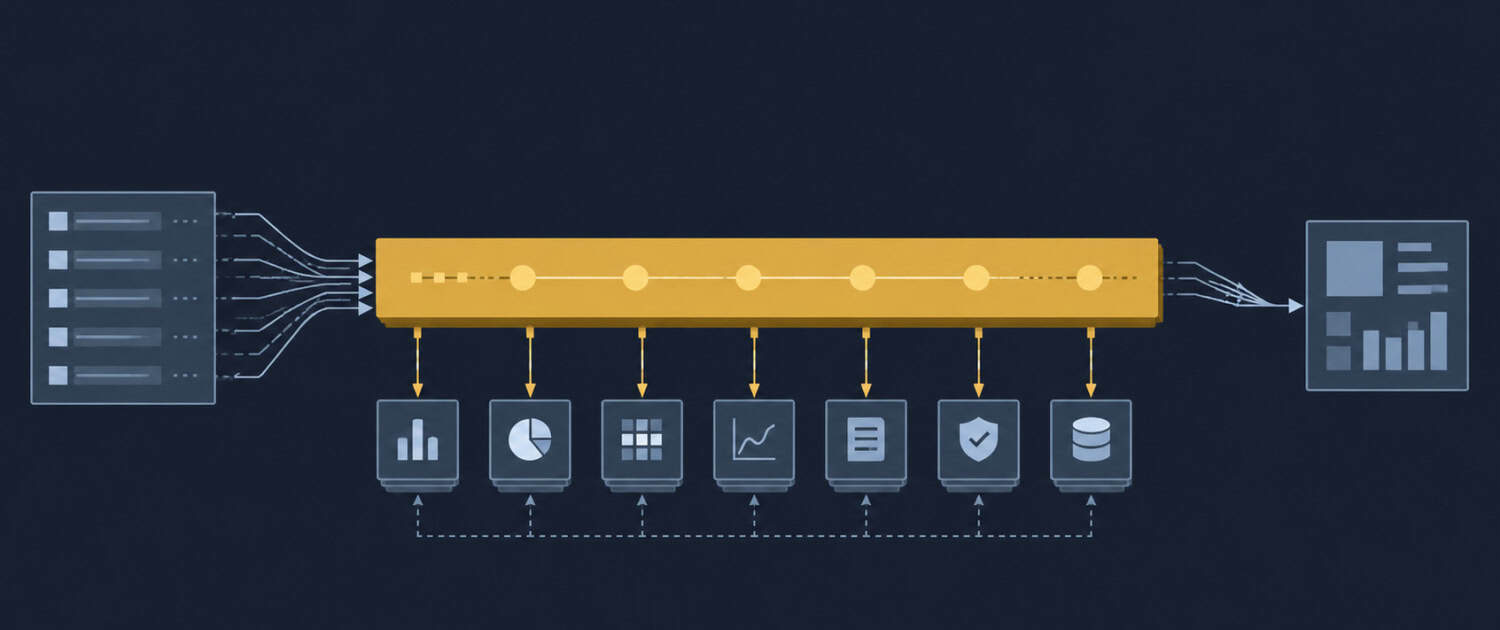
The process of coordinating multiple AI models, agents, or tools to work together toward a shared goal. An orchestration layer manages the sequence of tasks, routes information between agents, handles errors, and ensures that outputs from one step are properly formatted as inputs for the next. In commercial real estate, orchestration is what allows a single user request such as “analyze this deal” to trigger a pipeline that pulls data, runs financial models, generates a memo, and flags risk factors, all without manual intervention.
Putting AI Orchestration in Context
A portfolio manager submits a new acquisition opportunity to an internal AI system with a single instruction. The orchestration layer interprets the request, triggers a data retrieval agent to pull submarket rent and vacancy trends, passes those outputs to a financial modeling agent that populates a DCF, routes the completed model to a memo drafting agent, and delivers a formatted investment summary back to the portfolio manager. None of those handoffs required a manual step because the orchestration layer managed sequencing, data formatting, and error handling throughout the pipeline.
Frequently Asked Questions about AI Orchestration
What does an orchestration layer actually do in a CRE AI workflow?
The orchestration layer is the connective infrastructure that sits between the user’s request and the individual agents or tools that fulfill it. It interprets the goal, determines which tools or agents are needed and in what order, passes outputs between steps in the correct format, monitors for errors, and assembles the final result. Without an orchestration layer, each agent in a pipeline would need to be triggered and managed manually, which eliminates most of the efficiency benefit of using multiple specialized agents in the first place.
How is AI orchestration different from a workflow builder?
A workflow builder executes a fixed sequence of steps defined in advance, following the same path regardless of what it encounters during execution. AI orchestration can be dynamic, meaning the orchestration layer can interpret context, adjust the sequence of steps based on intermediate outputs, and make routing decisions that were not explicitly pre-programmed. In a CRE deal analysis pipeline, for example, an orchestrated system might recognize that a submitted property is a ground lease structure and route it through a different modeling agent than it would for a fee simple acquisition, without a human reconfiguring the workflow each time.
What are the most important design considerations when building an orchestration layer for CRE workflows?
The most critical considerations are error handling, output validation between steps, and the clarity of task decomposition. An orchestration layer that does not catch and respond to a failed or malformed output from one agent will pass that error downstream, where it can compound invisibly. In CRE workflows involving financial outputs, each handoff point should include a validation check confirming that the output meets the structural requirements of the next step before proceeding. Task decomposition, meaning how precisely the orchestrator breaks a complex goal into discrete agent instructions, determines the overall reliability of the system more than any individual agent’s capability.
What breaks in a CRE AI pipeline when orchestration is handled poorly?
Poor orchestration typically produces one of three failure patterns: an agent receives incorrectly formatted input and returns a low-quality output without flagging the problem, the pipeline stalls because the orchestrator cannot resolve an ambiguous intermediate result, or the final deliverable is structurally complete but internally inconsistent because outputs from different agents were not reconciled before assembly. In a CRE context, the last failure is particularly problematic because a polished investment memo with internally contradictory figures looks credible until a reviewer catches the discrepancy, which requires the same level of scrutiny the automation was meant to reduce.
Do CRE firms need to build their own orchestration layer or are there existing tools?
Several orchestration frameworks exist that CRE firms can build on rather than constructing from scratch, including LangChain, LlamaIndex, and cloud-native agent orchestration services offered by major AI providers. For firms without a technical team, workflow builder platforms such as n8n or Make can approximate orchestration for less complex pipelines. The right approach depends on the complexity and reliability requirements of the workflows involved. Firms automating high-stakes deal processes will generally need a more robust and auditable orchestration architecture than those automating internal reporting or research tasks.
Click here to get this CRE Glossary in an eBook (PDF) format.