

• Link to Facebook
  • Link to Youtube
  • Link to LinkedIn
  • Link to X
  • Link to Tiktok
  • Link to Instagram
  • EN ESPAÑOL
    • Inicio
    • Glosario de Términos
    • Modelos Financieros
    • Tutoriales Cortos
  • A.CRE HELP
    • Support Section
    • Contact Us
  • LOGIN/REGISTER
  • Shopping Cart Shopping Cart
    0Shopping Cart
Adventures in CRE
  • A.CRE
    • A.CRE Home
    • A.CRE Help
    • Accelerator
      • Learn More
      • Login
    • AI.Edge
      • Learn More
      • Login
    • Artificial Intelligence
    • Careers
    • CRE Event Calendar
    • CRE Job Board
    • Education
    • Library of Excel Models
    • Meet the A.CRE Team
  • RE Modeling
    • 1031 Exchange
    • Audio Series
    • All-in-One (Ai1) Model
      • Download
      • Guides and Tutorials
      • Support
    • Ask Me Anything (Live)
    • Beginner’s Guide to Excel
    • Excel Models
      • Excel Add-ins
      • Library of Excel Models
      • All-in-One (Ai1) Model
      • Apartment
      • Condo
      • Debt
      • Development
      • Equity Waterfall
      • Hotel
      • Industrial
      • Office
      • Portfolio
      • Retail
      • Single Family
      • Tutorial
    • Excel Tips
    • Practice Library of Case Studies
    • Stochastic Modeling
    • Argus
    • My Downloads / My Account
  • Careers
    • About Careers in Real Estate
    • Ask Me Anything (Live)
    • Audio Series
    • Compensation in Real Estate
    • CRE Job Board
      • Find a Job
        • Browse Jobs
        • Post a Resume
        • Register
        • Login
      • Post a Job
    • CRE Event Calendar
    • CRE Interviews
    • Day in the Life Series
    • Real Estate Legal Content
    • What CRE Pros Do
  • Education
    • Accelerator
    • AI.Edge
    • A.CRE 101
    • Ask Me Anything (Live)
    • A.CRE Audio Series
    • Audio Series
    • Book Reviews
    • CRE Event Calendar
    • Deep Dive Series
    • Glossary of CRE Terms
    • Real Estate Legal Content
    • Real Estate Clubs
    • University Profiles
    • Watch Me Build
  • AI
    • AI Skills
    • AI Use Cases in CRE
    • AI for CRE Training
    • AI Tools for CRE
    • AI.Edge Membership
      • Learn More
      • Login
  • Accelerator
    • Accelerator Reviews
    • Accelerator Story
    • Enroll Now
    • Learn More
    • See What’s New
    • Enterprise Members Only
      • General Enterprise Login
      • ICSC Login
      • M&M Login
    • Members Only
      • Extend/Renew Membership
      • Login
      • Manage Membership
  • My Downloads
    • View My Downloads
    • Find an Excel Model
    • Register
    • Login
  • Click to open the search input field Click to open the search input field Search
  • Menu Menu
You are here: Home1 / Glossary of Commercial Real Estate Terms2 / Legal Title
A.CRE
English

Legal Title

Equitable title and legal title are like two parts to a complete title. Equitable title gives an entity beneficial interest in the property or the full use and enjoyment of the property. Legal title provides enforceable legal ownership in court. Legal title is commonly used as collateral when there is debt on a property.

When a loan is secured through a mortgage, either the borrower maintains legal title and the lender places a mortgage lien on the property (lien theory states) or the lender takes legal title, while the borrower has equitable title (title theory states). If the borrower is in default, with a mortgage the lender has to go through the courts to foreclose. When the loan is secured through a deed of trust, legal title is given to a neutral third party, or trustee, and the borrower can usually foreclose on the property without going to court.
Putting ‘Legal Title’ in Context

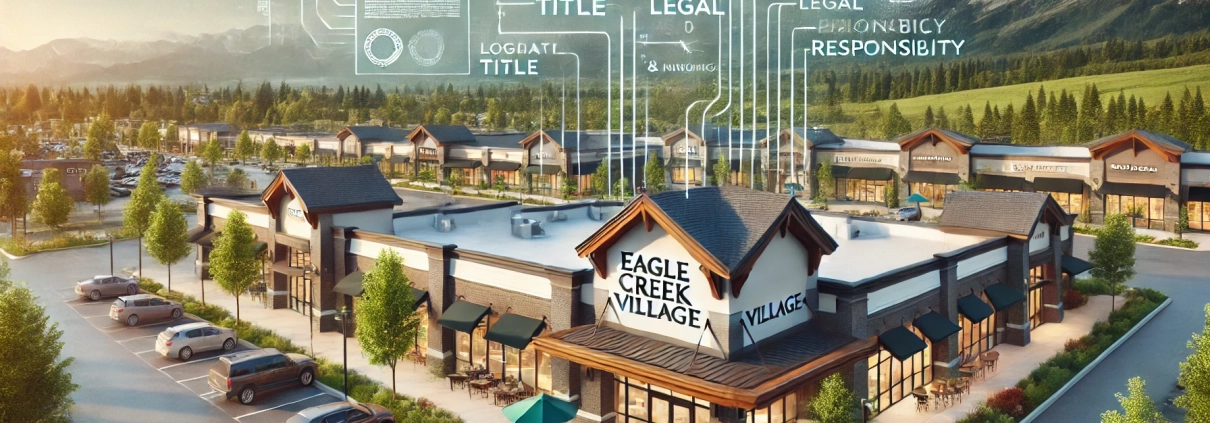
Pine Ridge Capital, a mid-sized real estate investment firm, is in the process of acquiring Eagle Creek Village Shopping Center, a 65,000-square-foot neighborhood retail center located in suburban Boise, Idaho. The center features a mix of local and national tenants, including a grocery anchor, coffee shop, and several boutique retailers. Pine Ridge sees this as a Core-Plus acquisition, targeting modest but steady cash flow with potential for long-term appreciation.

Acquisition Financing Structure

To purchase the property for $15 million, Pine Ridge Capital secures a $10 million loan from a regional bank, structured as a deed of trust. In this financing arrangement:

  • Legal Title: During the loan term, legal title to Eagle Creek Village is held by a neutral third-party trustee, as required under Idaho’s deed of trust laws. This trustee acts as a custodian of the title for the benefit of both the lender and Pine Ridge Capital.
  • Equitable Title: Pine Ridge Capital retains equitable title, granting it the rights to the property’s income, operations, and use while the debt is being repaid.

The Role of Legal Title in the Investment

Legal title plays a pivotal role in safeguarding the lender’s interests. If Pine Ridge Capital defaults on the loan, the trustee can foreclose on the property nonjudicially, expediting the process compared to states where mortgages require judicial foreclosure. This arrangement lowers the lender’s risk and enables Pine Ridge Capital to negotiate a slightly lower interest rate for the loan.

Example: Potential Foreclosure Scenario

Suppose Pine Ridge Capital encounters a financial setback and misses several loan payments. In this case, the trustee, holding legal title, initiates the nonjudicial foreclosure process on behalf of the lender. This would result in the property being sold at auction without requiring court involvement, streamlining the process and ensuring the lender recovers their investment more quickly.

Key Takeaways

This case illustrates the importance of distinguishing between legal title and equitable title. While Pine Ridge Capital benefits from operating and earning income from the property through equitable title, the lender’s security is protected by the legal title held in trust. This structure ensures that all parties’ interests are balanced, particularly in a state like Idaho, where deed of trust laws favor efficiency in resolving loan defaults.


Frequently Asked Questions about Legal Title in Real Estate

What is legal title in real estate?

Legal title provides enforceable legal ownership of a property in court. It represents the formal, recognized ownership and is commonly used as collateral when debt is placed on a property.

How does legal title differ from equitable title?

Equitable title gives the holder the right to use and benefit from the property, while legal title represents formal ownership. Legal title is essential for enforcing ownership in court and often used in financing arrangements.

How is legal title handled in a deed of trust?

In a deed of trust, legal title is held by a neutral third-party trustee for the benefit of both the lender and borrower. This enables nonjudicial foreclosure if the borrower defaults.

What happens if the borrower defaults under a deed of trust?

The trustee holding legal title can initiate a nonjudicial foreclosure, allowing the property to be sold at auction without court proceedings—streamlining the process and reducing lender risk.

What was the role of legal title in the Eagle Creek Village case?

In this case, legal title was held by a third-party trustee under Idaho’s deed of trust laws, protecting the lender’s interest. Pine Ridge Capital retained equitable title and operated the property.

Why is holding legal title important for lenders?

Holding or controlling legal title allows lenders to foreclose more efficiently, especially in title theory states or under a deed of trust, reducing the time and cost associated with judicial foreclosure.


Related Content:
  • Real Estate Tokenization, Part II: From Concept to Execution
  • Glossary: Deed of Trust
  • Glossary: Equitable Title
  • Real Estate Partnerships + JV Agreement Template
  • Glossary: Trustee
https://mmiuniversity.adventuresincre.com/wp-content/uploads/2023/07/Legal-Title.wav

Click here to get this CRE Glossary in an eBook (PDF) format.
by A.CRE
Share this entry
  • Share on X
  • Share on LinkedIn
  • Share by Mail
  • Link to Instagram
  • Link to Youtube
https://adventuresincre.com/wp-content/uploads/2022/04/logo-transparent-black-e1649023554691.png 0 0 A.CRE https://adventuresincre.com/wp-content/uploads/2022/04/logo-transparent-black-e1649023554691.png A.CRE2024-11-27 04:51:432025-07-03 05:43:42Legal Title

Featured Content

  • RE Financial Modeling Accelerator
  • A.CRE Job Search
  • Library of Real Estate Excel Models
  • Real Estate Financial Modeling
  • Real Estate Education
  • Real Estate Careers
  • AI in Real Estate

Recent Posts

  • A.CRE Apartment Development Model (Updated June 2026)
  • Mejora tu Desempeño en Excel con el Complemento “Excel 4 CRE” (Actualizado Junio 2026)
  • Nuevo Contenido en Español (Actualizado Junio 2026)
  • ¡Lanzamiento del Complemento “Excel 4 CRE” Completamente en Español! (Actualizado Junio 2026)
  • An AI Skill for the A.CRE Commercial Mortgage Loan Analysis Model
Accelerator - Learn More

Search Adventures in CRE

Search Search

Have a Question or Need Help?

Visit our Help Section

Contact Adventures in CRE

  • Visit A.CRE Help
  • Via Email
  • Via LinkedIn

You Might Also Like

  • Real Estate Modeling Courses
  • Real Estate Financial Modeling
  • A.CRE Job Board
  • Careers in Commercial Real Estate
  • Real Estate Education

A.CRE Library of Excel Models

  • Browse Excel Models
  • Login/Register
  • View My Downloads
  • Edit Account Details

Terms, Policies, and Disclaimer

  • Privacy Policy
  • Cookie Policy
  • AI Usage Policy
  • Terms of Use
  • Disclaimer
© 2014 - Present - Copyright - www.AdventuresinCRE.com, LLC | Adventures in CRE | A.CRE
  • Link to Facebook
  • Link to Youtube
  • Link to LinkedIn
  • Link to X
  • Link to Tiktok
  • Link to Instagram
Link to: Hard Costs Link to: Hard Costs Hard Costs Link to: Loan Amortization Link to: Loan Amortization Loan Amortization
Scroll to top Scroll to top Scroll to top