

Context Engineering
The discipline of deliberately designing and managing the information provided to an AI model, including instructions, retrieved documents, conversation history, and tool outputs, in order to maximize the quality and relevance of its responses. Context engineering goes beyond prompt engineering by treating the model’s context window as a finite, managed resource. In commercial real estate, effective context engineering determines whether an AI tool performs like a trained analyst or a generic chatbot. The difference lies in providing a structured package of the rent roll, operating history, market data, and deal thesis rather than sending a vague question with no supporting information.
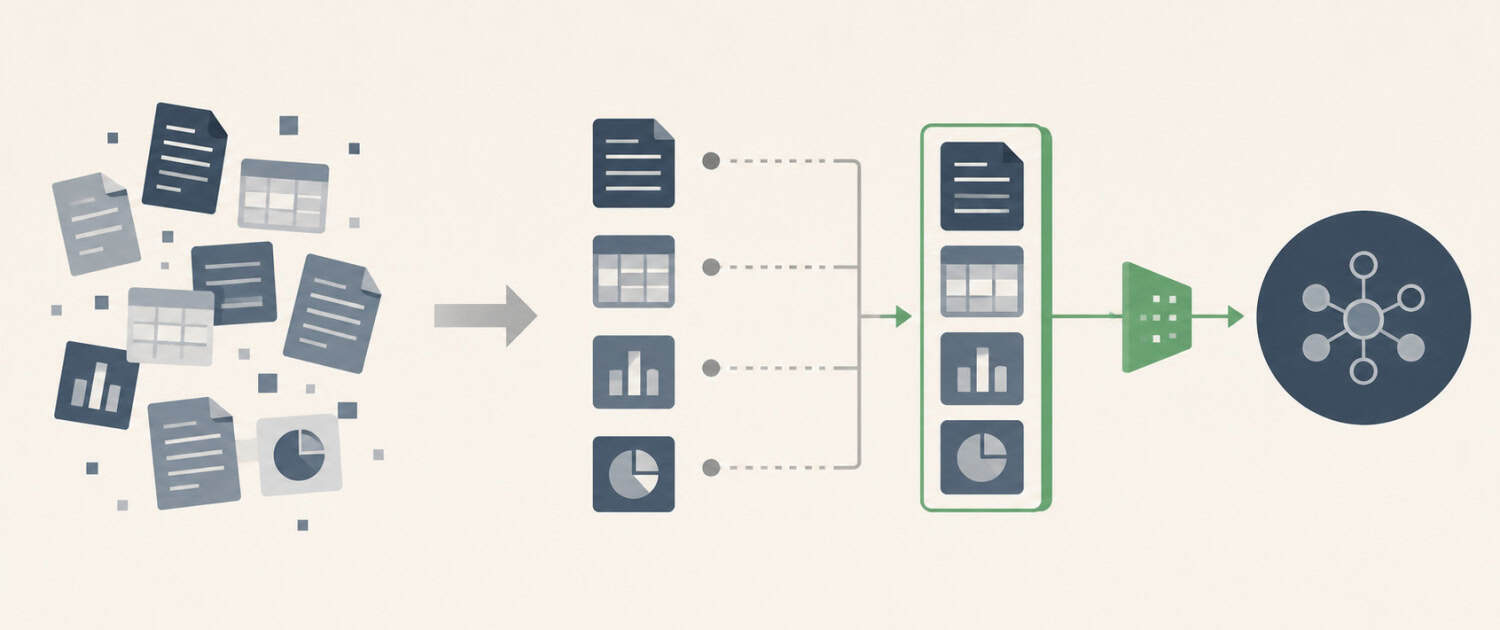
Putting Context Engineering in Context
An acquisitions analyst asks an AI model to assess whether a suburban office acquisition is priced appropriately. A poorly engineered context produces a generic response about office market dynamics. A well-engineered context packages the trailing twelve months operating statement, the current rent roll with lease expiration dates, the submarket vacancy and asking rent data, and the proposed purchase price before the question is asked, producing a response that addresses the specific deal on its specific terms. The analytical quality of the output is determined almost entirely by what was assembled and structured before the question was submitted.
Frequently Asked Questions about Context Engineering
How does context engineering differ from prompt engineering in a CRE workflow?
Prompt engineering focuses on how the instruction or question is worded, while context engineering addresses everything that surrounds that instruction: what documents are included, how they are structured, what background information is provided, and how prior conversation or tool outputs are managed within the model’s context window. In a CRE setting, prompt engineering might determine how a lease abstraction task is phrased, while context engineering determines which lease sections are included, in what order, and whether the model is also given the property type and market context that makes the abstraction more accurate. Both matter, but context engineering operates at the system design level rather than the individual query level.
What is a context window and why does it create constraints CRE teams need to manage?
A context window is the total amount of text a model can process in a single interaction, measured in tokens. Everything the model uses to generate its response, including the system instructions, the documents provided, the conversation history, and the question itself, must fit within this limit. In CRE workflows involving long leases, full operating statements, or multi-property portfolios, the context window fills quickly. Effective context engineering means deciding what to include, what to summarize, and what to retrieve selectively so that the most relevant information occupies the available space rather than filling it with content that does not improve the response.
What CRE information is most valuable to include when engineering context for a deal analysis task?
The highest-value context for a deal analysis task typically includes the current rent roll with lease terms and expiration dates, the trailing twelve months operating statement, the proposed purchase price and financing assumptions, and the key submarket metrics relevant to the asset type. A clearly stated deal thesis or investment objective also improves output quality significantly because it tells the model what the analyst is trying to evaluate rather than leaving it to infer the purpose. Including irrelevant documents or excessive background material dilutes the model’s focus and tends to produce responses that are broader and less precise than the analyst needs.
How should CRE teams handle documents that are too long to fit in the context window?
The standard approaches are chunking, summarization, and selective retrieval. Chunking splits the document into smaller segments that can be processed individually or passed through a retrieval system to identify the most relevant sections before they are included in the context. Summarization compresses a long document into a shorter representation that preserves the key facts while consuming fewer tokens. Selective retrieval, typically powered by a vector database, identifies and includes only the passages most relevant to the specific question being asked. In practice, a well-designed CRE AI workflow combines all three approaches depending on the document type and the nature of the task.
Is context engineering a one-time design task or does it require ongoing maintenance?
Context engineering is an ongoing discipline rather than a setup task. As the documents in a knowledge base are updated, as models change, and as CRE teams discover that certain context configurations produce better or worse outputs on specific task types, the context design needs to be revised accordingly. Teams that treat context engineering as a fixed configuration tend to see output quality degrade over time as the gap between what the model is given and what it actually needs widens. The firms that maintain the highest AI output quality are typically those that treat context design as a continuous operational responsibility assigned to someone with both CRE domain knowledge and working familiarity with how the models perform.
Click here to get this CRE Glossary in an eBook (PDF) format.