
Case Study #17 – Windsor Crossing: An Industrial Development (Case Study + Solution)
For our 17th case study, we turn to a merchant industrial development in the Lebanon Valley, one of the mid-Atlantic’s most active distribution corridors. This Windsor Crossing case study places you in the role of Alex Morgan, an investment analyst in the Northeast office of Meridian Industrial Partners (“Meridian”), a fictional national developer of warehouse and distribution properties.
In this scenario, your regional development director hands you an undeveloped site and one question: is it worth pursuing? You’ll underwrite a 200,000 SF speculative warehouse from land closing through construction, lease-up, and a merchant sale, structured through an LP/GP joint venture and a floating-rate construction loan. The deal turns on securing two credit tenants that haven’t yet signed, and on how the numbers hold up if they don’t show up on schedule.
Windsor Crossing – Background
You are Alex Morgan, an investment analyst in the Northeast office of Meridian Industrial Partners, a national developer of warehouse and distribution properties. On Monday morning, your regional development director forwards a land opportunity with a brief message: “Take a first pass. Is this worth pursuing?”
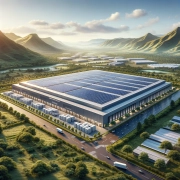
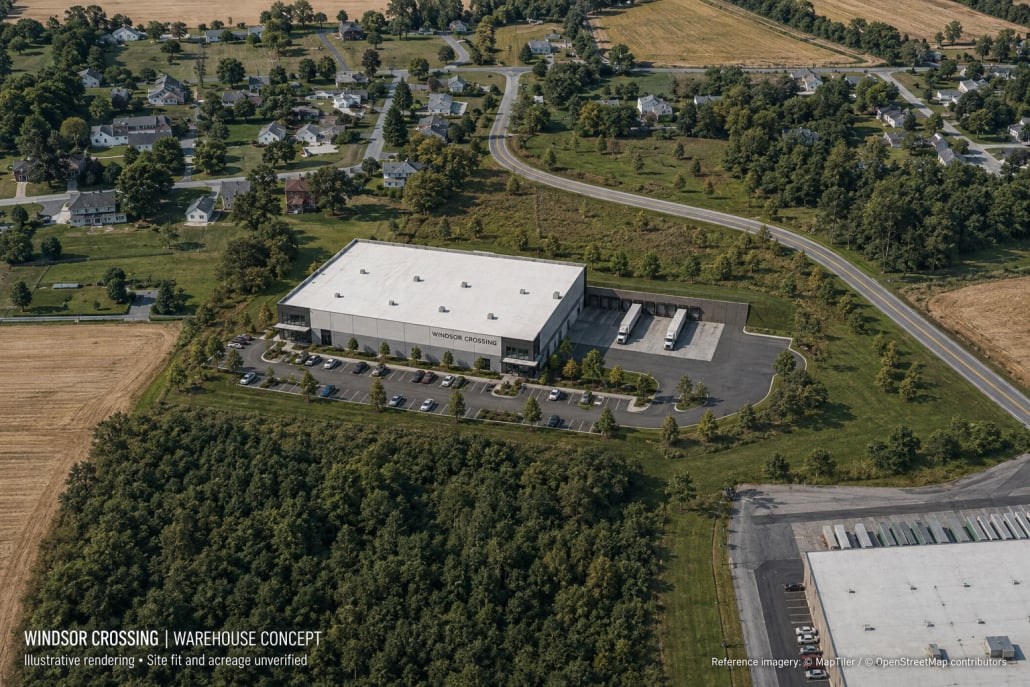
The opportunity is an undeveloped industrial site at 3135 Windsor Drive in Lebanon, Pennsylvania. Meridian is considering a modern, 200,000 SF warehouse divided into two equal suites. The business plan targets two credit-quality tenants seeking regional distribution space, with staggered occupancy dates and long-term, triple-net leases. No leases have been signed. Securing those tenants remains a central underwriting assumption.
Meridian would pursue the project as a merchant build: acquire the land, construct and lease the building, and sell it after 12 months of stabilized operations. The investment is funded through an LP/GP joint venture and a construction loan, with the venture required to fund 30% of the approved project budget in equity before drawing any debt. Loan interest floats at SOFR plus 500 basis points, with unfunded construction and lease-up interest capitalized into the project budget.
Your development director wants a recommendation before Friday’s pipeline meeting. The company, protagonist, tenant scenario, and transaction terms are fictional. The property address is real.
The Assumptions
Development Program
- Property type: Class A warehouse/distribution
- Rentable building area: 200,000 SF
- Site area: 15 acres
- Building configuration: Two 100,000 SF suites; 32-36 foot clear height
- Office finish: 5% of rentable area, included in TI allowance
- Land purchase price: $4,000,000; closing costs 1% of purchase price
- Hard costs, including sitework and utilities: $110/building SF
- Soft costs, excluding TI, LC, and financing: 15% of hard costs
- Construction contingency: 5% of hard costs
- Tenant improvements: $10/leased SF, paid at occupancy
- Leasing commissions: 5% of initial lease-term contractual base rent, net of free rent, paid six months before each tenant’s occupancy
Construction & Lease-Up
- Land closing: Month 0; construction period: Months 1-15, spent evenly
- Tenant 1: 100,000 SF, occupancy beginning Month 16
- Tenant 2: 100,000 SF, occupancy beginning Month 19
- Both tenants investment-grade, with parent guarantees
- Lease term: 10 years per tenant from occupancy
- Starting base rent: $12.00/SF/year NNN; first three months of each tenant’s occupancy free
- Contractual rent increases: 3% annually on occupancy anniversaries
- Recoverable operating expenses: $2.50/building SF/year, growing 3% annually
- Nonrecoverable owner expenses: $0.15/building SF/year
- Replacement reserve: $0.10/building SF/year, below NOI
- Stabilized physical occupancy: 100%, once both tenants are in occupancy
Timing, Stabilization & Merchant Sale
- Analysis start: January 1st, 2027 with land closing (month 0) December 31st, 2026
- Stabilization: first month both tenants are in occupancy and paying full contractual base rent
- Sale: end of Month 33, after 12 full months of stabilized operations
- Exit capitalization rate: 5.75%, applied to forward 12-month NOI
- Selling costs: 1.5% of gross sale price
- Outstanding construction loan repaid at sale; no permanent financing
Construction Debt
- Maximum construction loan: 70% of approved total project cost
- Equity contribution required before first debt draw: 30% of approved total project cost
- Interest rate: monthly projected 1-month Term SOFR + 500 basis points, 0% SOFR floor
- Origination fee: 1% of loan commitment, paid at closing
- Loan maturity: 36 months from land closing; no amortization, no exit fee
- Unfunded interest during construction and lease-up capitalized into the project budget and loan balance
Joint Venture Structure
- LP contributes 95% of every required equity contribution; GP contributes 5%
- Distributions: 95% LP / 5% GP until the LP achieves a 12% annual IRR
- Remaining proceeds split 80% LP / 20% GP; no separate GP catch-up
The Task
Build a monthly development model from a blank workbook, forecasting cash flows from land acquisition through sale, including development spending, tenant improvements, leasing commissions, debt draws, capitalized interest, operating cash flow, and the joint venture waterfall.
Calculate, for both total project equity before the waterfall and LP equity after promote: required equity, net profit, IRR, return on capital, and equity multiple. Also report total development cost, capitalized interest, peak loan balance, stabilized NOI, yield on cost, gross sale value, and net sale proceeds after debt repayment.
Does Windsor Crossing offer enough potential return to justify committing time and money to site diligence, preliminary design, and tenant discussions?
Extra Credit
Test how returns change if rents disappoint, construction costs rise, the second tenant arrives late, or the exit capitalization rate increases. Identify which assumptions most influence the decision, and what facts the team should investigate next before committing further resources.
Do you want to create a real estate financial modeling case study that perfectly suits your educational or professional needs? Check out our A.CRE Real Estate Case Studies Creator Assistant!
Download the Windsor Crossing (Case + Solution) PDF + Solution XLS
In addition to the web-based case, we’ve created a PDF version to download and use offline. Additionally, we’ve added a solution created by Spencer. Note that the solution may contain errors. If you spot an error, please let us know and we’ll roll out an update.
As with our real estate financial models, this case study and solution are offered on a “Pay What You’re Able” basis with no minimum (enter $0 if you’d like) or maximum (your support helps keep the content coming). Just enter a price together with an email address to send the download link to, and then click ‘Continue’.
We occasionally update these cases and solutions. Paid contributors will receive lifetime access to the case, solution, and all updates.